
GPT Live 1, in plain English
GPT Live 1 gives searchers a simple entry point for understanding how GPT-Live-1 relates to real-time voice AI.
Independent GPT Live 1 guide
Learn what GPT Live 1 and GPT-Live-1 mean, how OpenAI's new voice model family fits into ChatGPT Voice, and what builders should prepare before launching a voice AI product.
Overview
GPT Live 1 is the search-friendly way many people refer to GPT-Live-1, OpenAI's voice model for more natural spoken interaction. OpenAI describes GPT-Live as a new generation of voice models designed to make talking with AI feel more like a real conversation.
This page keeps the explanation practical: what the model family is, why full-duplex voice matters, what product teams should watch, and where to verify official availability before building.
Quick reference
Use this GPT Live 1 reference section when comparing GPT Live 1 search results, GPT-Live-1 announcements, voice AI product ideas, and official OpenAI resources.
A good GPT Live 1 page should explain what GPT Live 1 is, whether GPT Live 1 has API access, and how GPT Live 1 fits practical real-time voice AI workflows with official API checks and API fallbacks. For readers, GPT Live 1 should stay clear; for builders, GPT Live 1 should stay verifiable.
GPT Live 1 gives searchers a simple entry point for understanding how GPT-Live-1 relates to real-time voice AI.
GPT Live 1 is useful wording for people who want a plain explanation of GPT-Live-1 without reading technical notes first.
GPT Live 1 content should separate general voice model ideas from GPT-Live-1 claims that need official confirmation.
GPT Live 1 is most relevant when the product experience depends on spoken turns, timing, interruption, and natural replies.
GPT Live 1 builders should treat GPT-Live-1 API availability as something to verify before designing a launch plan.
GPT Live 1 research should point users back to GPT-Live-1 pages from OpenAI for safety, access, and release details.
GPT Live 1 works best as a topic for voice agents, tutoring, support flows, onboarding, accessibility, and hands-free tools.
GPT Live 1 search intent usually means the visitor wants a quick answer, a model name, or a path to official information.
GPT Live 1 planning should include microphone consent, fallback text input, safety limits, escalation, and analytics.
GPT Live 1 products need clear language about audio capture, retention, review, and user control before voice starts.
GPT Live 1 prototypes should test the whole loop from microphone input to GPT-Live-1 response and audio playback.
GPT Live 1 interfaces should still work when audio fails, a browser blocks microphone access, or the user prefers typing.
GPT Live 1 support tools should know when to stop answering and route the conversation to a human operator.
GPT Live 1 launch work should include prompt testing, source review, user education, performance checks, and rollback steps.
GPT Live 1 teams should monitor completion rate, repeated questions, failed turns, safety events, and user satisfaction.
Before launch, compare official GPT-Live-1 API access, official GPT-Live-1 API pricing, official GPT-Live-1 API regions, official GPT-Live-1 API safety, official GPT-Live-1 API latency, official GPT-Live-1 API consent, official GPT-Live-1 API fallback, and official GPT-Live-1 API monitoring against the latest OpenAI pages.
Use GPT Live 1 notes to verify official GPT-Live-1 API voice access before planning a production launch.
Use GPT Live 1 notes to verify official GPT-Live-1 API voice pricing before estimating customer costs.
Use GPT Live 1 notes to verify official GPT-Live-1 API voice regions before choosing deployment markets.
Use GPT Live 1 notes to verify official GPT-Live-1 API voice safety guidance before writing product rules.
Use GPT Live 1 notes to verify official GPT-Live-1 API voice latency expectations before testing prototypes.
Use GPT Live 1 notes to verify official GPT-Live-1 API voice consent requirements before recording audio.
Use GPT Live 1 notes to verify official GPT-Live-1 API voice fallback patterns before replacing text flows.
Use GPT Live 1 notes to verify official GPT-Live-1 API voice logging limits before storing session data.
Use GPT Live 1 notes to verify official GPT-Live-1 API voice handoff plans before routing support requests.
Use GPT Live 1 notes to verify official GPT-Live-1 API voice monitoring needs before measuring live sessions.
Use cases
Real-time voice models are most useful when the user needs a conversation, not a form. These are the product categories worth watching.
Triage questions, collect context, answer routine requests, and hand off complex cases to a human team.
Practice language, interview skills, sales scripts, exam prep, or software onboarding through natural spoken feedback.
Let users ask, revise, confirm, and complete tasks when typing is slow, awkward, or unavailable.
Guide new users through setup, ask clarifying questions, and explain features without a long help article.
Explore multilingual experiences where speech, timing, and conversational context matter more than static text.
Support people who prefer voice, need low-friction interaction, or cannot comfortably use a keyboard.
Voice workspace
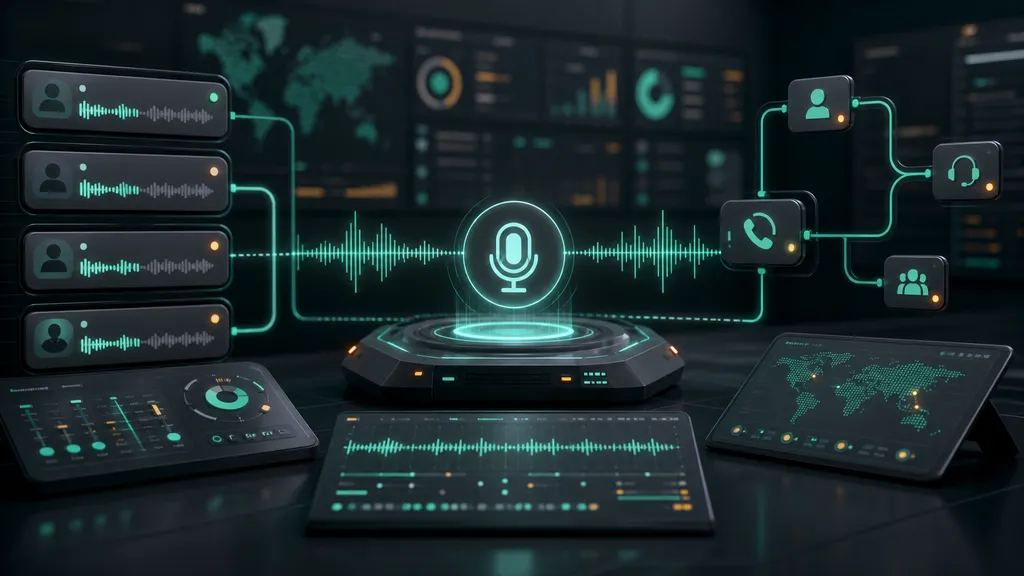
Think beyond a single microphone button. Useful voice AI products usually need routing, escalation, analytics, status states, and a visible way to explain what the assistant is doing.
API notes
Treat this as an implementation checklist, not official API documentation. Model names, pricing, limits, regions, and access paths can change. Confirm every production decision with OpenAI's official API documentation and product announcements.

Check whether GPT-Live-1 is available to your account or whether you need to join an API interest list.
Measure end-to-end microphone capture, streaming, model response, and audio playback time.
Design for users who pause, restart, talk over the assistant, or change direction mid-thought.
Document what the assistant can do, what it cannot do, and when it should refuse or escalate.
Explain microphone use, retention, analytics, and any human review process in plain language.
Keep text input, retry states, and human support paths available when voice is not enough.
Planning framework
A strong GPT Live 1 product should feel simple to the user, but the planning work behind it is rarely simple. Teams need to define the job the assistant performs, the points where it should ask a clarifying question, and the moments where it should stop and hand control back to a person.
The best early prototypes are narrow. They focus on one repeatable workflow, one clear audience, and one measurable outcome. That makes it easier to compare the spoken experience with a normal text form, help center article, chatbot, or human support process.
Write down the first question a visitor is likely to ask, the information the assistant must collect, and the point where the answer becomes complete. This prevents the experience from becoming an open-ended demo with no business goal.
A useful assistant needs boundaries. Decide whether it explains, recommends, troubleshoots, books, summarizes, or escalates. A narrow role makes responses easier to review and gives users a clearer expectation of what will happen next.
Real conversations include pauses, corrections, background noise, and changed intent. Test what happens when someone interrupts, repeats a request, asks for a slower answer, or switches from audio to typed input halfway through the task.
Track completion rate, time to useful answer, escalation rate, user satisfaction, and the number of times people retry the same request. These signals are often more valuable than novelty metrics or raw session length.
For public pages, explain what the assistant can do in plain language before asking for microphone access. People are more likely to try a live interaction when the task, privacy expectation, and fallback path are visible.
For internal tools, start with workflows where employees already repeat the same decision tree many times a day. A spoken assistant can help when it reduces switching between tabs, scripts, and support systems.
For developer teams, keep a release checklist that includes model access, prompt review, safety testing, analytics, logging policy, support handoff, and a rollback plan if the live experience does not perform as expected.

Official sources to verify
FAQ
Short answers for searchers, builders, and product teams tracking GPT-Live-1.
GPT Live 1 commonly refers to GPT-Live-1, part of OpenAI's GPT-Live voice model family for more natural spoken AI conversations. This site uses both spellings so people searching for "gpt live 1" can find a clear explanation.
No. GPTLive1.pro is an independent guide and resource site. For product availability, pricing, safety details, and developer access, always confirm with OpenAI's official pages.
OpenAI has published a GPT-Live-1 API interest form. API access, pricing, model names, and release timing may change, so builders should check OpenAI's official API and product pages before implementation.
Common use cases include AI voice agents, live tutoring, sales assistants, support triage, language practice, accessibility tools, meeting companions, and conversational product onboarding.
Plan for latency, turn-taking, interruptions, privacy disclosures, user consent for microphones, fallback text flows, safety boundaries, logging rules, and a clear path for handoff to a person when needed.
No. GPTLive1.pro does not provide model access, accounts, tokens, or paid API credentials. It is a plain-language guide with links to official OpenAI resources.
Use GPTLive1.pro as a lightweight starting point for product planning, then validate every launch decision against OpenAI's official pages.